New UW–Madison Study Finds College Affordability Policies Can Have Unintended Consequences
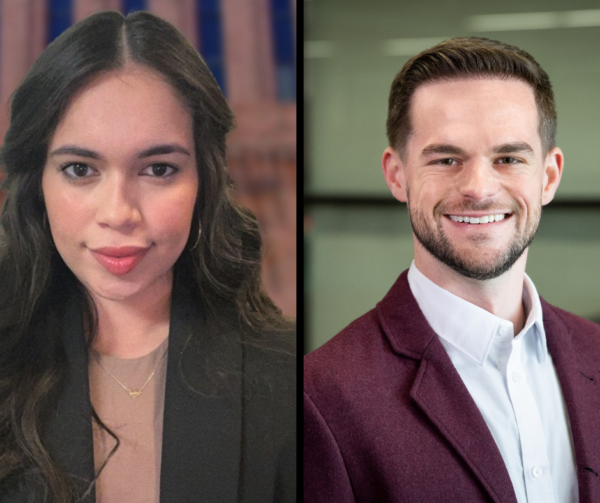
As concerns about rising college costs continue to drive higher education policy discussions, a new study by University of Wisconsin–Madison School of Education researcher Taylor Odle suggests that policies designed to limit tuition increases may not always achieve their intended results.
In a newly published article in The Review of Higher Education, Odle and co-author Salome Otero examine how public colleges and universities responded to Tennessee’s tuition regulation policy, which established binding ranges that limited how much institutions could increase tuition and fees each year.
Using causal research methods, the article “Institutional Responses to Tuition Controls: Evidence from Tennessee’s Tuition Ranges” explores how institutions adapted to the policy and finds that responses varied across sectors.
Among key findings:
- Public universities generally raised in-state tuition and fees to the upper end of the allowable range, resulting in tuition levels that exceeded what researchers would have expected in the absence of the policy.
- Community colleges largely maintained in-state tuition levels but increased out-of-state tuition and fees.
- Some institutions reduced spending on institutional grant aid, raising concerns about potential unintended consequences for students.
The findings underscore the complexity of designing policies that balance affordability, access, and institutional sustainability.
“Everyone is concerned about college costs, not just students and families,” said Odle. “Institutions want to keep prices low so that students avoid sticker shock, and policymakers want to keep higher education broadly accessible. But policymakers’ natural response has, for too long — especially in Wisconsin — been to freeze tuition, which has many downstream effects. This is why you have seen so many college closures across the country, including right here in Wisconsin.”
Odle noted that tuition revenue remains the primary source of funding for many colleges and universities. Limiting that revenue without providing alternative support can create significant challenges for institutions and, ultimately, for students. What remains for revenue after a tuition freeze are relatively rare federal grants and often limited state funding.
Rather than relying on a single approach, the study suggests that policymakers should consider strategies that address institutional needs while maintaining affordability for students and families.
“This study shows there is no one-size-fits-all approach to controlling college prices,” said Odle. “Research points to policies that help ‘buy down’ tuition through public investment, allowing institutions to keep prices lower while continuing to invest in student success. Another option is a more measured approach, such as tuition ranges (as the findings of this research suggest) that provide institutions with flexibility to raise tuition when necessary and within reason. Higher education in Wisconsin would look radically different, for the better, with this more measured, evidence-driven approach.”
The study contributes to a growing body of research examining how colleges and universities respond to policy changes and offers insights for policymakers seeking effective ways to address college affordability.
For higher education leaders, researchers, and policymakers, the findings serve as a reminder that institutional responses matter and that policy design can shape outcomes in unexpected ways.
About the Researchers
Odle is an assistant professor of Educational Policy Studies at UW–Madison. He is also a faculty affiliate in Data Science, the Institute for Research on Poverty, the Institute for Diversity Science, and the Interdisciplinary Training Program in Education Sciences. His work leverages quantitative methods and data science techniques to study issues concerning the economics of education and education policy with a specific focus on college access and success, including college admissions practices, financial aid, and college advising and coaching.
Otero is a Ph.D. student in the Urban Education Policy program and a Research Assistant at the Pullias Center for Higher Education at the University of Southern California.
About the Wisconsin Center for Education Research
The Wisconsin Center for Education Research (WCER) at UW–Madison’s #1-ranked School of Education is one of the oldest and most productive education research centers in the world. It has assisted scholars and practitioners in developing, submitting, conducting and sharing grant-funded education research for over 60 years. Learn more at wcer.wisc.edu.