Personalization for Whom? Toward What?: Identity, Power, and Possibility in Holistic Personalized Coaching | Carl A. Grant Lecture Series
Dionne Cross, Francis
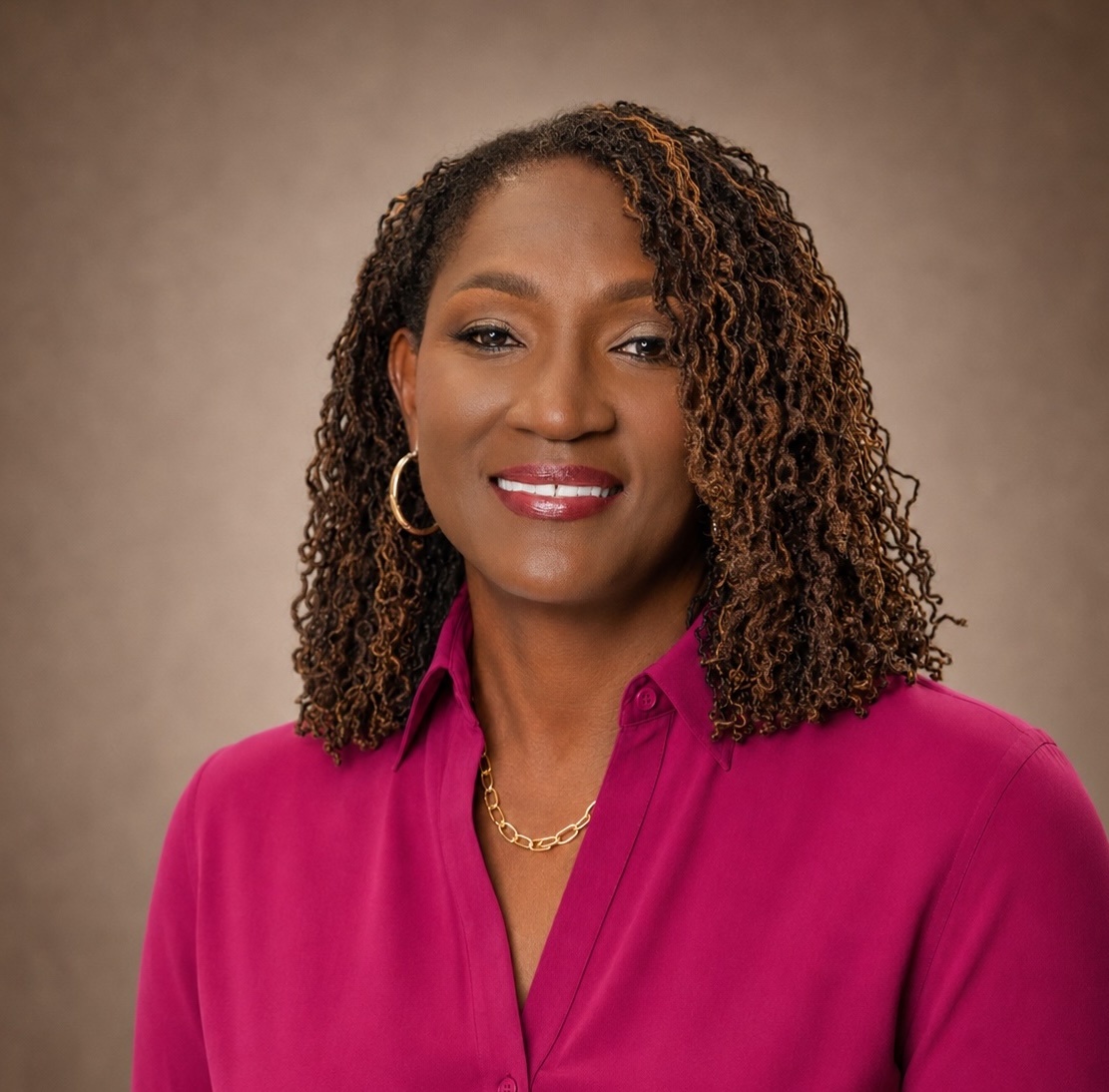
What does it mean to support teachers as whole people, and whose vision of improvement guides that support? Drawing on a program of research examining the interconnectedness of teachers’ beliefs, emotions, efficacy, and identity, in this talk, Cross Francis will discuss how these attributes inform teachers’ instructional decisions and actions. She will also explore how teacher learning unfolds through the interaction of personal and professional experiences within broader social and institutional contexts. This work foregrounds the need to personalize support for teacher learning in teacher education and professional development. Personalization is achieved through extending coach noticing to attend to psychological, emotional, and social attributes that may become sufficiently activated to create possibilities for pedagogical change during Holistic Personalized Coaching (HPC).
Dionne Cross Francis is the Joseph R. Neikirk Term Professor in the Culture, Curriculum and Teacher Education Program at the University of North Carolina at Chapel Hill. Her research focuses on identifying the contextual, cultural, and teacher-specific factors that influence teacher actions as they plan and instruct. By deepening our understanding of these factors, we can determine the optimal design features of professional development that allow teachers to thrive. Results of this work have informed the design and implementation of professional development initiatives in the US (Indiana, Georgia) and internationally (Ghana, Jamaica, Kosovo, South Sudan, Turkey). A second area of research is investigating the influence of participation in multigenerational counterspaces on high school, undergraduate, and graduate Women of Color’s well-being and ability to thrive. As a part of this work, she co-directs the I CAN PERSIST (ICP) STEM Initiative. Her work has been disseminated in high-quality journals including Educational Psychologist, Teaching and Teacher Education, Contemporary Educational Psychology, and Journal of Mathematics Teacher Education.